Can One Geometry Program Drive CPU and GPU?
Sharing a geometric definition across CPU and GPU requires agreement on operations, precision, and failure behavior—not just similar images.
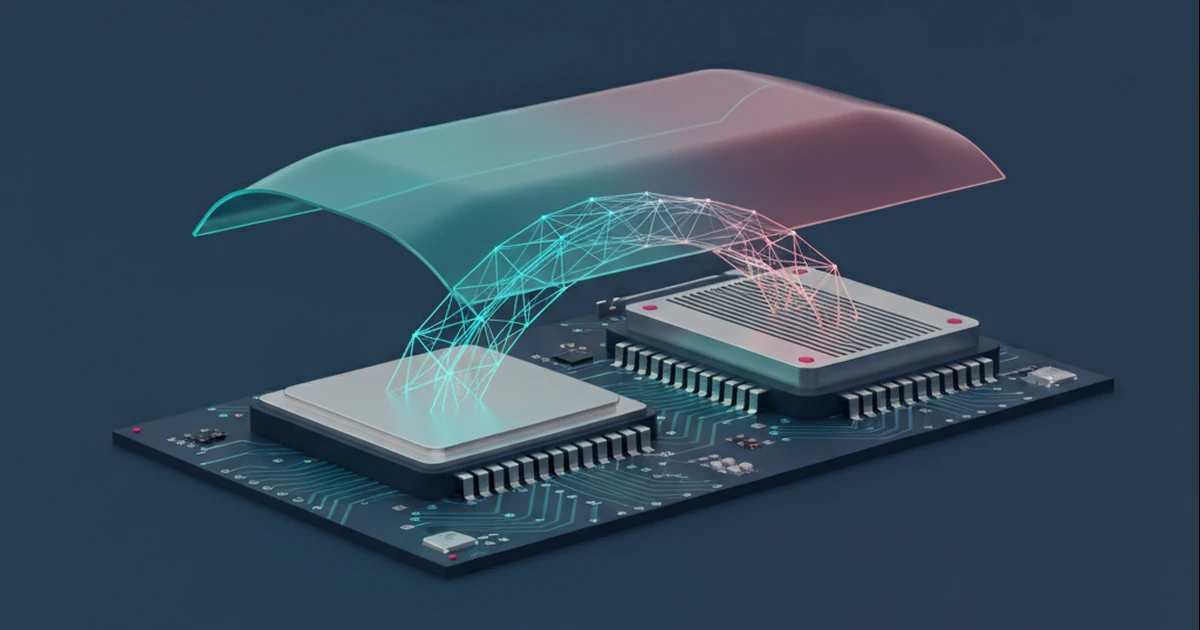
A CPU evaluator and a GPU viewport can display the same recognizable object while disagreeing about important details.
Near a thin wall or a boundary, a small numerical difference might change a classification or query result. A screenshot comparison would not necessarily reveal it.
A shared geometric program would therefore need a definition of cross-target agreement that goes beyond visual similarity.
Specify the supported subset first
A proposed language might contain operations that one execution target cannot evaluate. The supported subset should be explicit before translation or dispatch begins.
An unsupported construction should produce a clear result. Quietly changing its meaning to obtain an image would undermine the idea of a shared definition.
For a bounded experiment, a small set of primitives and operators is more useful than a broad compatibility claim with unknown exceptions.
Numerical agreement is an engineering choice
What counts as agreement depends on the operation. A classification test, a distance query, and an image may need different comparison rules.
The WGSL specification documents floating-point behavior and accuracy conditions for the shading language. Those conditions are a reason to define comparisons deliberately, rather than assume every target will reproduce the same numerical execution.
A tolerance must be justified by the intended task, not selected afterward to make a failing example pass.
Compare intermediate meaning, not only pixels
For a simple region, tests could compare classifications at independently chosen points, including near-boundary cases. Additional checks could examine transforms and supported composition operations.
Viewport evidence would then need to establish that the actual hardware execution used the intended program and current geometry. A correct CPU reference cannot prove which shader the visible application executed.
Likewise, a valid shader compilation does not establish the correctness of its output.
Keep research targets distinct from current evidence
NeuroCAD’s architecture policy specifies that the interactive viewport evaluates SDF geometry through hardware WebGPU/WGSL. That architecture does not by itself prove that a complete experimental Universal Geometric Language (UGL) definition has a qualified GPU implementation.
The proposed CPU/GPU investigation would need evidence for the same declared language subset, inputs, revision, and expected behavior on both targets.
The potential benefit is a consistent source of geometric meaning. Establishing it requires explicit numerical and execution evidence; a pair of matching renders would be only one observation.
Research note: These proposed workflows do not establish current NeuroCAD feature availability, performance, or engineering qualification.
Discuss NeuroCAD as a pilot or investment opportunity.
Working MVP/demo is available for qualified conversations.
Contact the Founder