Designing Mechatronic Systems Through Composable Engineering Objects
An electric actuator illustrates how mechanical placement, sensor function, wiring, and thermal conditions could participate in a coordinated design workflow.
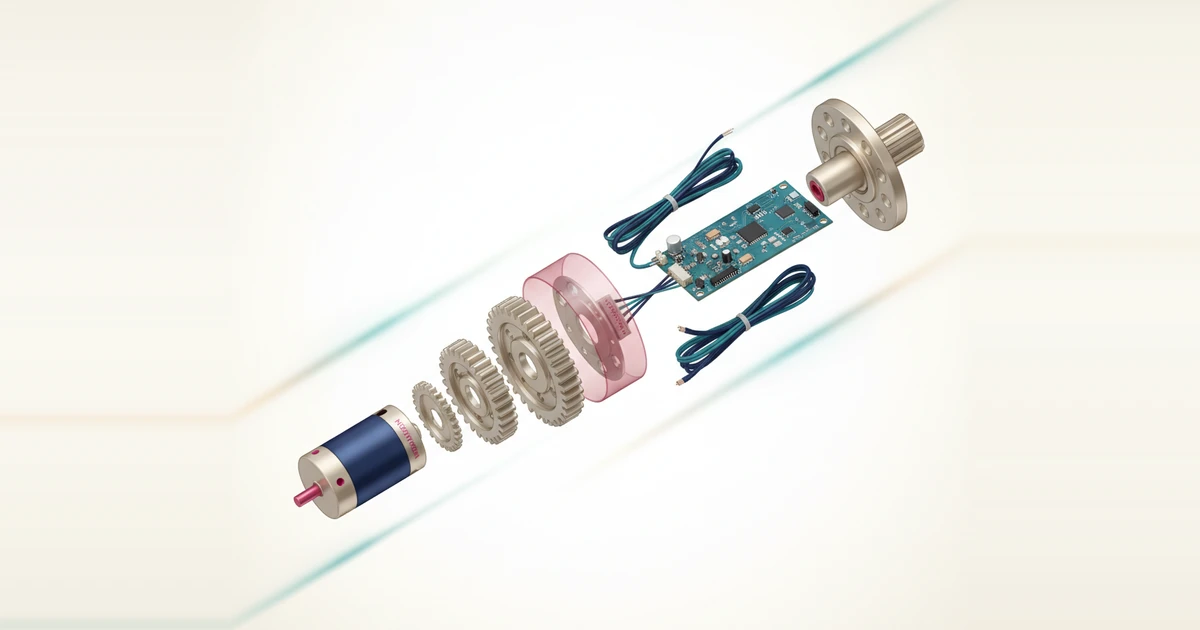
An electric actuator is not simply a motor, gearbox, and housing placed next to one another.
Its position sensor must observe the intended motion. Its wiring needs a feasible route. Its drive train needs appropriate mechanical relationships. Heat generated during operation must be considered in the assembly’s context.
Composable engineering objects could help organize these relationships, provided composition does not conceal the differences between disciplines.
Compose a function as well as an assembly
Consider a rotary actuator built from a motor, reduction stage, output shaft, and position sensor. Each definition could expose the references relevant to its role.
The output shaft’s placement would be related to the housing. The sensor would need a defined measurement relationship. Electrical connections would carry their own meanings.
Creating the mechanical assembly would not automatically establish the sensing or control behavior.
Follow a design change across domains
Suppose the motor is replaced by a larger variant. Its mounting interface might remain compatible, while the housing envelope, cable routing, and thermal assumptions change.
A coordinated model could identify those affected relationships for review. It should not treat an unchanged mounting pattern as proof that the replacement is acceptable.
The engineering benefit would be visibility into consequences, including those outside the immediate geometric edit.
Keep a shared object from becoming a universal solver
A component description can reference mechanical, electrical, thermal, and control information without computing every domain result.
Placement belongs to geometry and assembly evaluation. Electrical behavior, thermal response, and control performance need the corresponding models and engineering methods.
The object would coordinate inputs and evidence; it would not turn a geometric match into proof that the actuator meets its operating requirements.
Review the assembled behavior
A useful research demonstration would define one actuator configuration and a limited set of permitted component substitutions. It would then check whether the relevant references and assumptions remain traceable.
Interesting failures include an invalid sensor relationship, insufficient routing space, or a thermal study that no longer applies after substitution. Exposing those failures is part of the proposed benefit.
For NeuroCAD, composability is valuable when a reusable component retains an understandable role within a larger design. Reusing its geometry alone is insufficient; the surrounding engineering relationships must remain explicit and reviewable.
Research note: These proposed workflows do not establish current NeuroCAD feature availability, performance, or engineering qualification.
Discuss NeuroCAD as a pilot or investment opportunity.
Working MVP/demo is available for qualified conversations.
Contact the Founder