Engineering Change Without Rebuilding Everything
Changing a bolt pattern exposes the difference between useful incremental evaluation and unsafe reuse of stale geometric or engineering results.
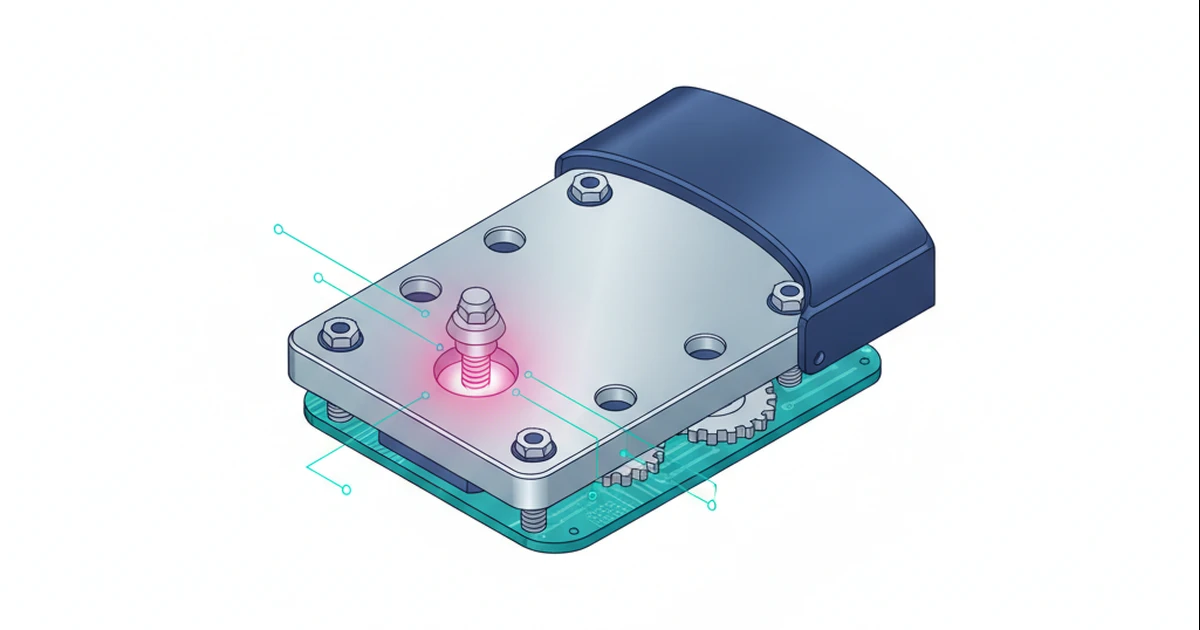
An engineer changes the spacing of a mounting pattern. Must the application rebuild every unrelated component and rerun every analysis?
Often the useful question is smaller: what actually depends on that spacing?
Incremental geometry evaluation investigates how previously computed results might be reused without allowing stale results to masquerade as current ones.
Follow dependencies beyond the changed solid
A bolt-pattern edit may affect hole positions, fastener placement, interface checks, and a local stress study. An unrelated cover may remain unchanged.
The affected set is not necessarily identical to the visible feature subtree. A dimension referenced elsewhere can create a dependency outside that subtree.
A proposed evaluator would therefore need explicit input relationships, including those used by checks and derived engineering artifacts.
Reuse depends on the complete input
A stored result may depend on more than geometric parameters. Evaluation settings, representation choices, tolerances, and relevant material or solver inputs can also matter.
Two requests with the same object name need not be the same computation. Conversely, two instances may share a reusable definition while retaining different placements or permitted overrides.
The reuse decision must follow the actual inputs of the result being reused.
Keep preview and committed results distinct
During a drag, an application may produce a temporary preview. Once the engineer commits the edit, the resulting document needs a clear relationship to validated outputs.
A fast approximate preview should not silently replace a result that was previously checked under stricter conditions. Its purpose, limitations, and freshness need to remain visible.
That distinction matters even when both outputs look alike.
Compare incremental work with a fresh evaluation
A useful experiment would replay the same edit sequence through an incremental path and a separate full recomputation. It would compare the intended outputs after each committed edit.
Cases should include deleted references, changed evaluator settings, and edits that alter topology. Returning to an earlier parameter value is also valuable: it can reveal reuse that appears correct only because the previous state remained in memory.
Performance measurements should include the bookkeeping needed to identify and invalidate affected results.
The potential benefit is less unnecessary work during change. NeuroCAD’s research does not assume that every edit can remain local, or that a passing incremental example establishes a general cache-validity guarantee.
Research note: These proposed workflows do not establish current NeuroCAD feature availability, performance, or engineering qualification.
Discuss NeuroCAD as a pilot or investment opportunity.
Working MVP/demo is available for qualified conversations.
Contact the Founder