Parametric Engineering for Automotive Surfaces and Complex Housings
An electric-drive housing shows how surface design must balance appearance, packaging, mounting references, and manufacturing constraints.
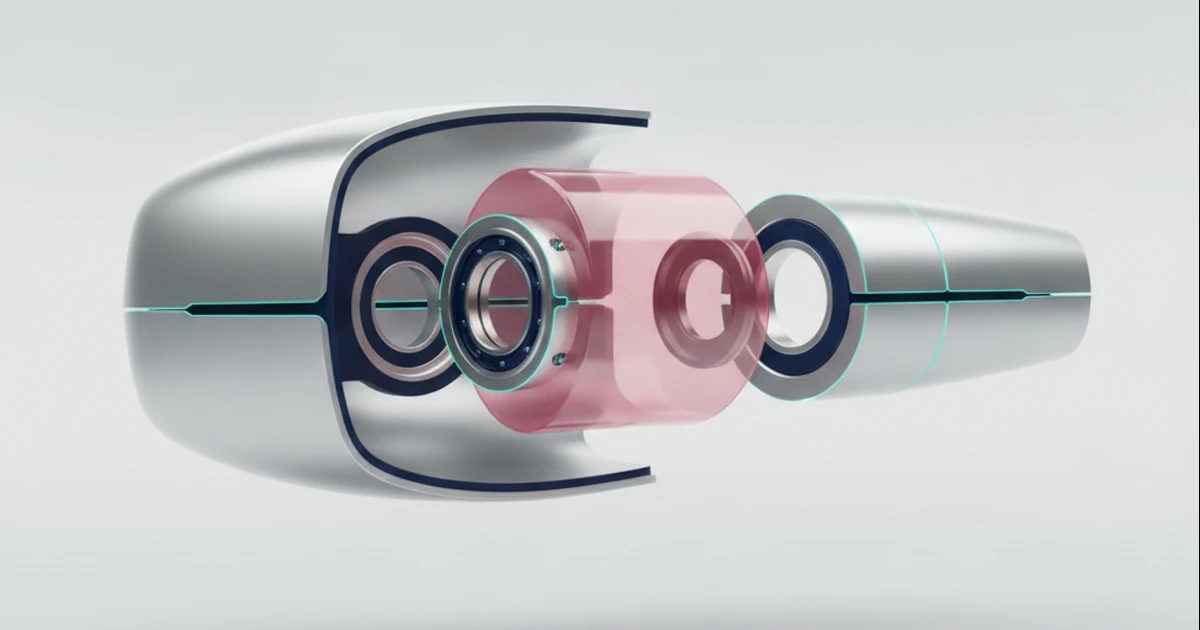
Reshaping an electric-drive housing can improve one objective while making another harder.
A smoother exterior may reduce space near a mounting point. A new rib may conflict with an adjacent component. Moving a passage may change the geometry available for a sealing face.
The automotive example in this note asks how surface freedom and functional constraints could coexist in a parameterized definition.
Separate protected interfaces from editable regions
Imagine a housing with a bearing seat, mounting pads, a sealing interface, and a freeform exterior.
The exterior might be editable while selected functional regions remain constrained. The engineer should be able to identify those regions intentionally, rather than depend on an entire surface staying unchanged.
If an edit makes the protected conditions impossible to satisfy, the model should expose the conflict.
Specify what “smooth” should mean
A visually gentle transition does not fully describe the required relationship between neighboring surfaces.
Depending on the task, the engineer may care about position, tangent behavior, curvature behavior, or a manufacturing-specific condition. These need explicit definitions and appropriate checks.
The model should not infer a manufacturing guarantee from a pleasing reflection or a shaded viewport. Visual inspection remains useful, but it answers a different question.
Make packaging a design input
Suppose a neighboring cable route occupies a protected envelope. An exterior-shape edit should be checked against that envelope along with the housing’s own internal requirements.
A packaging pass would still not establish crashworthiness, thermal performance, structural life, or manufacturability. Each requires its own conditions and evidence.
Keeping these checks separate could make the consequences of an edit easier to understand.
Test shape changes that challenge the definition
A meaningful prototype would move control regions near mounting pads, alter the available package space, and exercise parameter combinations close to their declared limits.
It would check which references remain meaningful, whether the specified surface relationships hold, and when the evaluator refuses an edit. Manufacturing exchange would need separate validation of the generated artifact.
For NeuroCAD, the research opportunity is not an unrestricted shape tool that somehow preserves every engineering property. It is a controlled construction in which editable surfaces, protected interfaces, and explicit checks participate in the same design description.
That is a bounded proposition worth testing on a housing family before claiming broader automotive design coverage.
Research note: These proposed workflows do not establish current NeuroCAD feature availability, performance, or engineering qualification.
Discuss NeuroCAD as a pilot or investment opportunity.
Working MVP/demo is available for qualified conversations.
Contact the Founder